
| Prof. Jiyou JiaPeking University, China Dr. Jiyou Jia is a full professor and the Head of the Department of Educational Technology, Graduate School of Education, Peking University, China and is also the founding director of International Research Center for Education and Information at Peking University. He serves concurrently as the Vice Principal of Science at Xinxin School affiliated to Peking University High School. He is the responsible professor for the national-level online and offline blended first-class undergraduate course "Education and Artificial Intelligence". He was invited to work as a guest professor by School of Education, Technical University of Munich, Germany, a Distinguished Professor at Institute for Research in Open and Innovative Education, the Open University of Hong Kong China, and a visiting professor by the Education University of Hong Kong China. His research interests include educational technology and artificial intelligence in education, especially in TELL (Technology Enhanced Language Learning), math education with ICT, and decision making support system. He has been responsible for a dozen of national projects and international cooperation projects. His has won a number of national and international prizes, and published more than 150 articles in internationally or nationally peer-reviewed journals and conferences. Speech Title: The Development and Application of a Math Intelligent Assessment and Tutoring System (MIATS V2.0) in Math Education Based on Big-data Mining Abstract: This speech introduces an intelligent mathematical assessment and tutoring system MIATS V2.0, which can not only provide adaptive assessment for students based on big data mining, but also guide students individually to solve difficult questions step by step. Four quasi-experiments in schools were conducted to evaluate the effect of this system on students’ performance. The analysis of the collected data demonstrates that the system can provide personalized assessment and tutoring and enhance the students’ learning performance, and is an effective approach to realize the value-added evaluation, the integration of testing and learning, and the promotion of learning through testing. This study provides a valuable reference for utilizing intelligent assessment and tutoring systems to help implement the macro policies such as student assessment reform, reducing the students’ burden and increasing the educational efficiency. |
| Prof. Gautam SrivastavaBrandon University, Canada Gautam Srivastava was awarded his B.Sc. degree from Briar Cliff University in U.S.A. in the year 2004, followed by his M.Sc. and Ph.D. degrees from the University of Victoria in Victoria, British Columbia, Canada in the years 2006 and 2012, respectively. He then taught for 3 years at the University of Victoria in the Department of Computer Science, where he was regarded as one of the top undergraduate professors in the Computer Science Course Instruction at the University. From there in the year 2014, he joined a tenure-track position at Brandon University in Brandon, Manitoba, Canada, where he currently is active in various professional and scholarly activities. He was promoted to Professor in January 2023. Dr. G, as he is popularly known, is active in research in the fields of security, privacy and the Internet of Things. In his 10-year academic career, he has published a total of 500 papers in high-impact conferences in many countries and in high-status journals (SCI, SCIE) and has also delivered invited guest lectures on Big Data, Cloud Computing, Internet of Things, and Cryptography at many international universities. He is an Editor of several international scientific research journals including IEEE Transactions on Industrial Informatics, IEEE IoT Journal, IEEE Transactions on Services Computing, IEEE Transactions on Computational Social Systems, IEEE Transactions on Cybernetics, and Elsevier’s Information Sciences. His research program is funded by the National Sciences and Engineering Research Council of Canada (NSERC), MITACS, and the National Cybersecurity Consortium. Speech Title: Critical AI Literacy Abstract: As artificial intelligence becomes increasingly embedded in everyday tools, workplaces, and decision-making systems, the ability to engage with AI critically is emerging as an essential form of literacy. This talk on Critical AI Literacy explores what it means to not only use AI technologies, but to understand, evaluate, and question them in meaningful ways. It begins by demystifying how AI systems work at a conceptual level—how they generate outputs, what data they rely on, and why their responses may appear convincing even when incorrect. Building on this foundation, the session examines key ethical concerns, including bias, fairness, transparency, and the societal implications of deploying AI at scale. Participants will learn how to recognize common forms of bias in AI-generated content and understand the limitations that arise from training data and model design. The talk also emphasizes practical evaluation skills, focusing on how to assess the accuracy, reliability, and contextual appropriateness of AI-generated information. A central component of the discussion is responsible and effective AI use, including strategies for crafting clear, precise prompts and interpreting outputs critically rather than passively accepting them. Finally, the talk addresses decision-making frameworks for determining when AI should—and should not—be used across different academic, professional, and social contexts. By the end of the session, attendees will be equipped with a grounded, practical understanding of AI systems and the critical thinking skills necessary to engage with them responsibly in an increasingly AI-mediated world. |
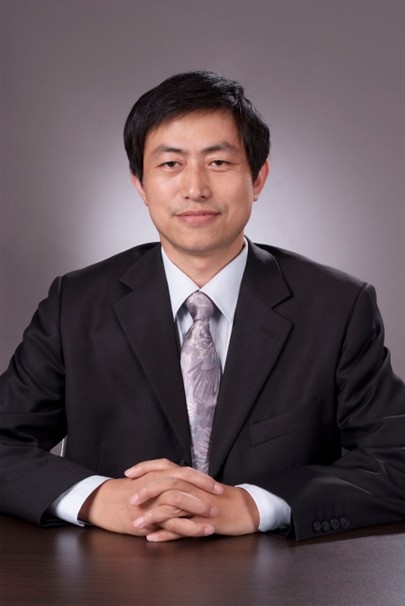

| Prof. Shadiev RustamZhejiang University, China Dr. Rustam Shadiev is a Professor at the College of Education, Zhejiang University, China. He is a Fellow of the British Computer Society (BCS), a Senior Member of the Institute of Electrical and Electronics Engineers (IEEE), and a Senior Member of the Association for Computing Machinery (ACM). Dr. Shadiev's research focuses on advanced educational technologies and their applications in artificial intelligence–supported education, language learning, intercultural communication, immersive learning environments, and digital innovation in teaching and learning. His work has made significant contributions to understanding how emerging technologies can enhance learning outcomes, global competence, and cross-cultural engagement. He has published extensively in leading international SSCI journals, including Computers & Education, British Journal of Educational Technology, Journal of Computer Assisted Learning, and other highly regarded outlets in educational technology and learning sciences. His scholarly impact has been widely recognized, earning him inclusion among the Most Cited Chinese Researchers in Education for five consecutive years (2020–2024) and the Stanford/Elsevier Top 2% Scientist Rankings (2023–2025). In recognition of his academic achievements, Dr. Shadiev was awarded the title of Distinguished Professor of Jiangsu Province, China, in 2019. He serves on the editorial boards of several prestigious international journals, guest edits special issues for leading publications, and is frequently invited to deliver keynote and invited speeches at major international conferences worldwide. |

| Prof. Wentao WuAnhui Normal University, China Wu Wentao, a native of Zongyang, Anhui Province, is a professor, Doctor of Education, and doctoral supervisor. He currently serves as the Dean of the School of Educational Science at Anhui Normal University. Wu Wentao received his Bachelor of Science degree in Educational Technology from Anhui Normal University, his Master of Education degree in Modern Educational Technology from Anhui Normal University, and his Doctor of Education degree in Educational Technology from Nanjing Normal University. Wu Wentao also serves as a board member of the Information Technology Education Committee of the China Association for Educational Technology (CAET) and a board member of the Information Technology Education for Primary and Secondary Schools Committee of the Chinese Society of Education. He has received numerous honors, including the National Third Prize and the Anhui Provincial First Prize in the National University Faculty Teaching Innovation Competition, the Anhui Provincial "Rising Star of Teaching," and the Anhui Provincial Special Prize for Teaching Achievements. Research Areas: His primary research area is the application of intelligent technology in education. His current research interests include the application and evaluation of intelligent educational products, as well as the teaching of information technology courses in primary and secondary schools. |

| Prof. Shuai LiuHunan Normal University, ChinaShuai Liu (M-22,SM-25), male, professor and doctoral supervisor, Director of Key Laboratory of Educational Informatization and Intelligence of Higher Education Institutions in Hunan Province. His main research directions are computer vision, multimodal information processing, and AIED. Professor Liu has published over 80 high-level papers in journals such as IEEE TFS/TMM/TITS/ and conferences such as ACM MM, with a total citation of over 8,000 times and a Google h-index of 48. He has been consecutively selected for the list of the world's top 2% scientists from 2021 to 2025 (Stanford University). He is a review expert for the Key R&D Program of China, a communication review expert for the National Natural/Social Science Foundation of China. Professor Liu serves as an editorial board member and reviewer for several top journals and conferences (such as CCF Rank A, SCI Q1, etc.). He mainly engages in information processing in education, dedicated to applying visual and multimodal information to solve educational problems, enhance teaching quality, and achieve educational precision and equity. The main research direction is AIED, including the understanding and mining of educational texts, the analysis and evaluation of class, and empirical research on AIED. |
```